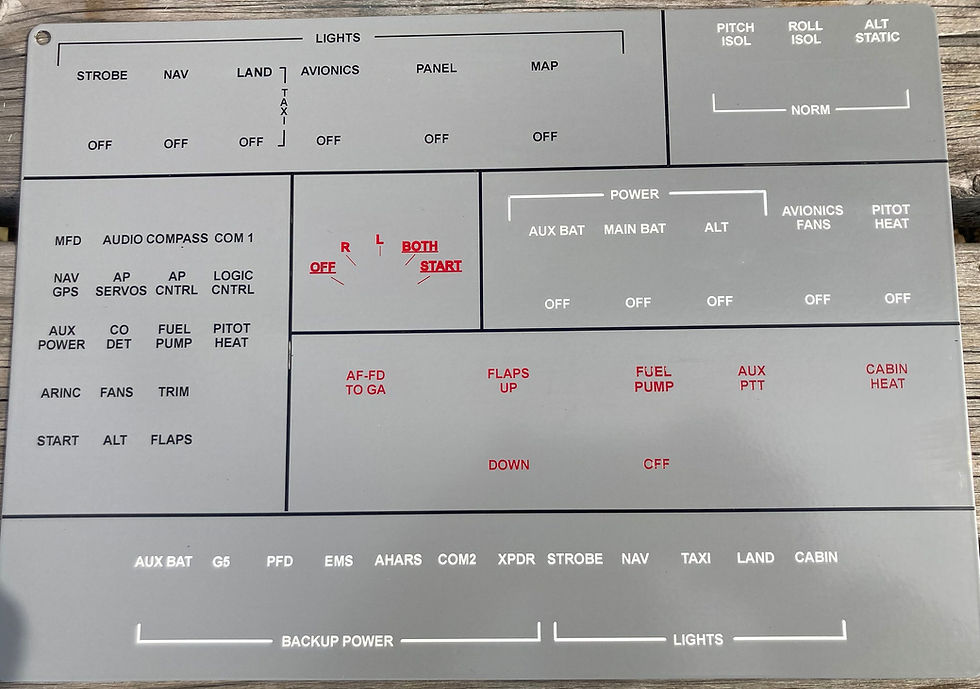
How to Specify a Stainless Steel Data Plate: A Complete Guide
- Jul 2
- 18 min read
Updated: Jul 13
Estimated reading time: 12 minutes
Although relatively small, a stainless steel data plate performs one of the most important jobs on any machine or piece of industrial equipment. It provides permanent identification, communicates essential operating information and supports maintenance, servicing and regulatory compliance throughout the equipment's working life. Whether you're specifying a replacement plate for an existing machine or designing a new product, choosing the correct material, thickness, marking method and information layout will ensure the plate remains readable for many years, even in demanding industrial environments.
A stainless steel data plate is a permanently marked identification plate attached to machinery, equipment or industrial assets. It provides essential information including manufacturer details, model numbers, serial numbers, electrical ratings and regulatory information such as CE or UKCA markings.
Unlike printed labels, stainless steel data plates are designed to remain legible throughout the life of the equipment, even when exposed to harsh industrial environments, chemicals, UV light and regular cleaning.
This guide explains everything you need to know before specifying a stainless steel data plate.
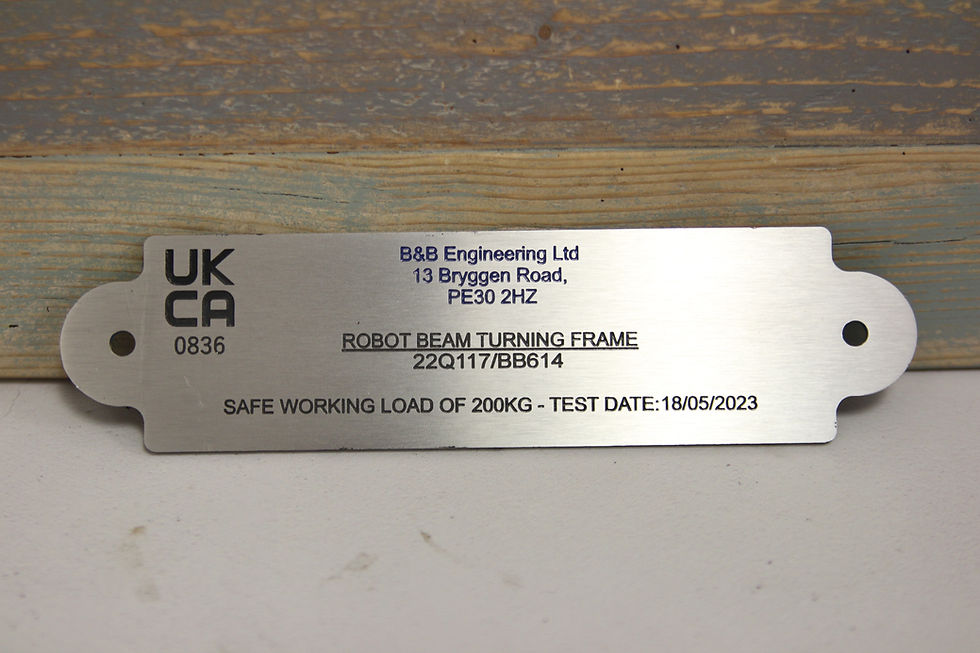
How to Specify a Stainless Steel Data Plate (Step-by-Step)
Specifying a stainless steel data plate doesn't need to be complicated. By working through the following six steps, you can ensure the finished plate is suitable for the application, remains legible throughout its service life and contains all the information required for operation, maintenance and compliance.
Step 1 – Choosing the Correct Material
The first decision is selecting the correct grade of stainless steel.
For most industrial machinery, electrical equipment and control panels, 304 stainless steel provides excellent corrosion resistance, durability and value for money. It is the most commonly specified material and is suitable for the majority of indoor and general outdoor applications.
Where equipment will be installed in marine, offshore, coastal or chemically aggressive environments, 316 stainless steel offers improved resistance to chlorides and corrosive chemicals, making it the preferred option for these harsher conditions.
Rule of thumb: If the environment doesn't demand 316, 304 is usually the most appropriate choice.
Step 2 – Choose the Plate Thickness
The thickness of the plate affects both durability and the method of fixing.
As a general guide:
Thickness | Typical Applications |
0.5 mm | Adhesive-backed labels, small identification plates |
0.8 mm | General machinery and equipment (most common) |
1.2mm | Larger plates requiring additional rigidity |
1.5 mm | Heavy-duty industrial applications |
2.0 mm+ | High-wear environments or specialist applications |
Selecting a plate that is too thin can reduce rigidity, while unnecessarily thick material may increase costs without providing additional benefits.
Step 3 – Choose the Surface Finish
The finish affects both appearance and readability.
Common options include:
2B Finish – Smooth, clean and commonly used for industrial equipment.
Brushed Finish – Reduces glare and provides a professional appearance.
Mirror Finish – Primarily decorative but can also be laser marked.
Bead Blasted Finish – Creates a uniform matte surface that can improve contrast on certain laser markings.
The best finish depends on both the environment and the desired appearance of the finished plate.
Step 4 – Decide How the Plate Will Be Fixed
The fixing method is just as important as the material itself.
Common options include:
High-performance industrial adhesive
Rivets
Screws
Spot welding
Mechanical fixings
The correct choice depends on the operating environment, surface condition and whether the plate may need to be removed or replaced in the future.
Step 5 – Decide What Information Needs to Be Included
Before production begins, consider exactly what information the plate needs to display.
Typical information includes:
Manufacturer's details
Equipment description
Model number
Serial number
Asset number
Electrical ratings
CE or UKCA information
QR codes or Data Matrix codes
Safety information
Company logo
It's often worth thinking beyond today's requirements. Information that may seem unnecessary during manufacture can become invaluable during servicing or future maintenance.
Step 6 – Choose the Marking Method
Finally, decide how the information will be applied.
For most industrial applications, laser marking offers an excellent combination of permanence, accuracy and durability. Unlike printed labels or ink-based systems, laser marking permanently alters the surface of the metal, creating markings that resist abrasion, moisture, UV exposure and many industrial cleaning chemicals.
Depending on the application, markings can be produced as high-contrast surface marks, dark annealed marks or deep laser engravings for maximum durability.
Although laser marking is the preferred solution for many industrial data plates, it isn't always the right choice. Applications requiring extremely fine detail, paint-filled lettering or specific aesthetic finishes may benefit from chemical etching instead.
Before You Place an Order
Before sending artwork to your supplier, ask yourself these six questions:
Have I chosen the correct material for the environment?
Is the plate thick enough for the application?
Is the surface finish appropriate?
How will the plate be fixed to the equipment?
Does it include all the information required for servicing and compliance?
Will the marking remain legible throughout the equipment's working life?
What Is A Stainless Steel Data Plate?
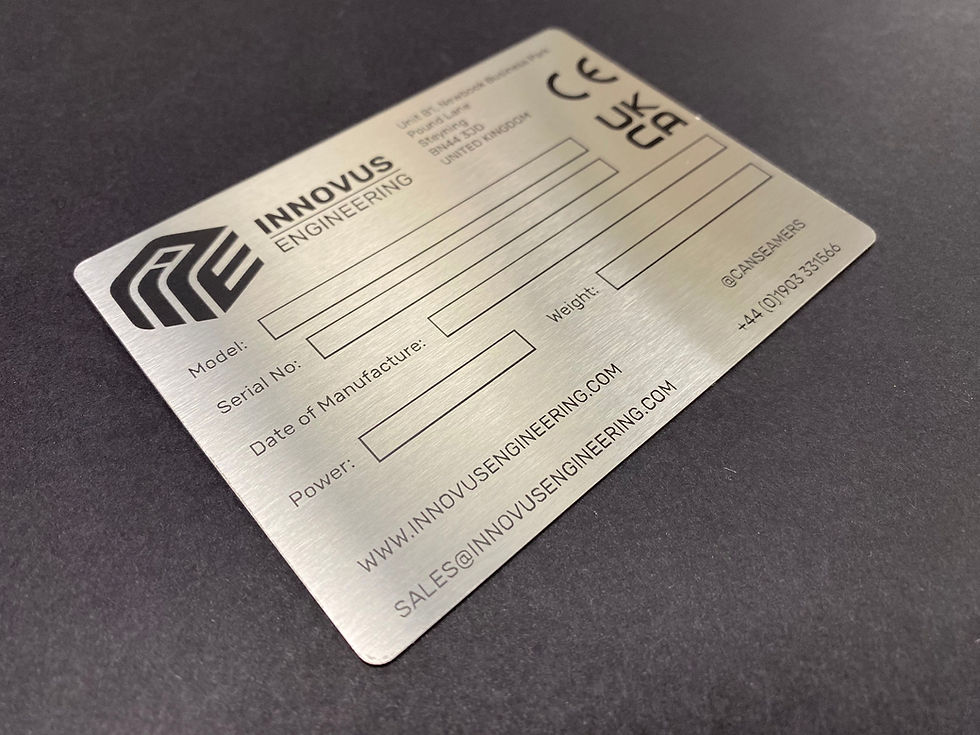
A stainless steel data plate plays an important role in maintaining the traceability of equipment throughout its service life. Permanent information such as serial numbers, batch numbers, manufacturing dates, revision levels and unique identification codes allows individual machines or components to be tracked from manufacture through installation, servicing, inspection and eventual replacement. In industries where quality assurance, regulatory compliance or preventative maintenance are critical, clear and durable identification helps engineers confirm exactly what equipment is installed, when it was produced, which revision it is and whether it has been subject to recalls, upgrades or scheduled maintenance. When combined with laser-marked QR codes or Data Matrix codes, a data plate can also provide instant access to digital records such as manuals, inspection reports, maintenance history or spare parts information.
How Are Stainless Steel Data Plates Manufactured?
Stainless steel data plates can be manufactured using several different processes depending on the application. Modern fibre laser marking produces permanent, high-contrast markings without inks or consumables, making it ideal for serial numbers, QR codes and industrial identification. Where greater depth is required, laser engraving can remove material to create durable recessed markings suitable for harsh environments. Plates may also be chemically etched, mechanically engraved or printed, although each process has advantages and limitations depending on the application.
Choosing Between 304 and 316 Stainless Steel
Feature | 304 Stainless Steel | 316 Stainless Steel |
Typical use | General industrial machinery and equipment | Marine, offshore and chemical environments |
Corrosion resistance | Excellent for most applications | Superior in chloride-rich and aggressive environments |
Outdoor use | Excellent for most inland locations | Best for coastal and marine locations |
Cost | Lower | Higher |
Javik recommendation | Default choice for most applications | Specify only where the environment demands it |
304 Stainless Steel
Recommended for:
Machinery
Control panels
Industrial equipment
General outdoor use
For most industrial applications, 304 stainless steel is the standard choice for machine data plates, asset tags and equipment identification. It offers an excellent combination of durability, corrosion resistance and cost-effectiveness, making it suitable for the vast majority of indoor and general outdoor environments.
The majority of the stainless steel data plates we manufacture are produced from 304 stainless steel. Unless an application has specific environmental or regulatory requirements, 304 provides the performance needed to deliver a long-lasting, permanently marked identification plate.
General Industrial Equipment
304 stainless steel is widely used on machinery, production equipment, electrical control panels and industrial enclosures. It performs well in factories, workshops and plant rooms where equipment is protected from aggressive chemicals and marine environments.
Outdoor Installations
304 stainless steel also performs well in many outdoor applications. It offers excellent resistance to rain, humidity and normal weathering, making it a popular choice for external equipment, plant machinery and utility installations. While prolonged exposure to salt-laden coastal air may justify specifying 316 stainless steel, 304 is more than adequate for most inland outdoor environments.
Excellent Corrosion Resistance
One of the reasons 304 stainless steel is so widely specified is its natural resistance to corrosion. The chromium content forms a thin, self-repairing passive layer on the surface, helping to protect the metal from rust and everyday environmental exposure. This allows laser-marked information to remain clear and legible for many years.
Easy to Maintain
304 stainless steel requires very little maintenance. In most industrial settings, occasional cleaning is all that is needed to keep the plate looking professional and ensure markings remain easy to read throughout the equipment's service life.
Cost-Effective Performance
For many applications, upgrading to 316 stainless steel offers little practical benefit. Choosing 304 where appropriate helps control project costs while still providing a durable, professional and permanent identification solution.
Is 304 Stainless Steel Suitable for Your Application?
If your equipment will be installed in a typical manufacturing environment, factory, workshop, commercial building or inland outdoor location, 304 stainless steel is usually the most appropriate choice. It delivers excellent durability and corrosion resistance without the additional cost of 316.
However, if the equipment will operate in marine, offshore, coastal or chemically aggressive environments, 316 stainless steel may provide greater long-term protection.
316 Stainless Steel
Recommended for:
Offshore
Coastal
Marine
Chemical environments
While 304 stainless steel is suitable for the vast majority of industrial applications, there are situations where upgrading to 316 stainless steel is a sensible investment.
Offshore and Marine Applications
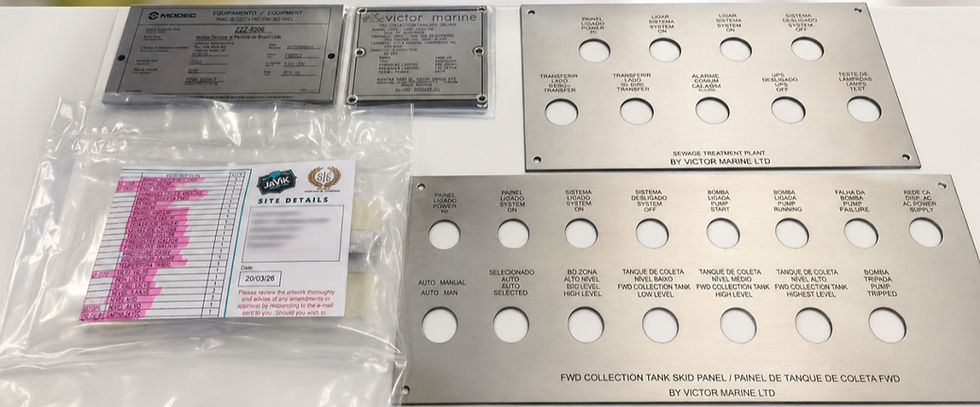
Saltwater is highly corrosive due to its chloride content. Over time, chloride exposure can cause pitting corrosion on 304 stainless steel, particularly if salt deposits remain on the surface. The added molybdenum in 316 stainless steel greatly improves resistance to this type of attack, making it the preferred choice for offshore platforms, ships, docks and other marine equipment.
Coastal Installations
Equipment installed close to the sea is continually exposed to airborne salt carried by the wind. Even if the equipment never comes into direct contact with seawater, salt deposits can accumulate on the surface and gradually attack lower grades of stainless steel. For machinery installed in coastal locations, 316 stainless steel generally provides a longer service life.
Chemical Processing
Many industrial cleaning chemicals, solvents and process fluids are more aggressive than ordinary water. Where equipment is regularly exposed to corrosive chemicals or harsh cleaning agents, 316 stainless steel offers improved resistance and helps maintain the appearance and integrity of the data plate over many years.
Is 316 Always Better?
Not necessarily.
One of the biggest misconceptions is that 316 stainless steel should always be specified because it's "better." In reality, it is more specialised, not automatically the right choice.
For most machinery, control panels, electrical enclosures and general industrial equipment, 304 stainless steel provides excellent corrosion resistance, durability and value for money. The majority of the stainless steel data plates we manufacture are produced from 304 stainless steel, with 316 available where the application or customer specification requires the additional corrosion resistance.
What Information Should Be Included on a Stainless Steel Data Plate?
A stainless steel data plate is far more than a simple identification label. It provides the essential information needed to identify, operate, maintain and trace equipment throughout its working life. The exact information required will depend on the application, industry and any relevant regulations, but most industrial data plates include a combination of the following.
Machine Identification
Every piece of equipment should be uniquely identifiable. A data plate typically displays the machine name, model number and equipment description, allowing operators, maintenance engineers and service personnel to quickly identify the correct machine without referring to external documentation. This becomes particularly important where multiple similar machines are installed on the same site.
Manufacturer Information
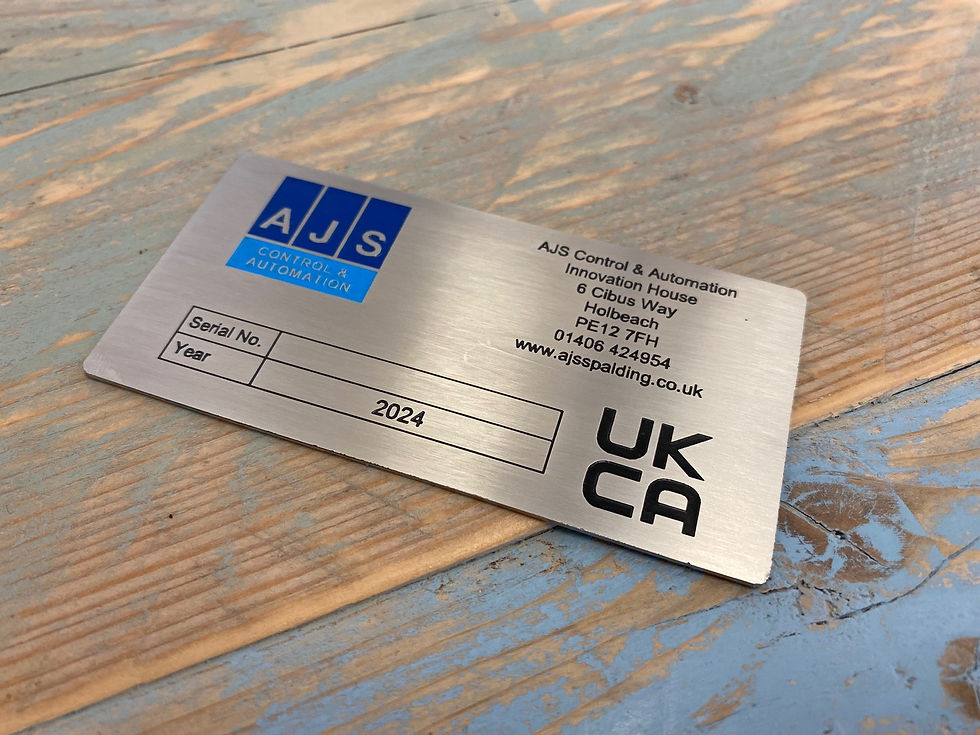
The manufacturer's name, logo, address or contact details are often included to identify who designed or built the equipment. This information can simplify servicing, warranty claims, spare parts enquiries and future technical support.
Serial Numbers
A unique serial number gives every machine or component its own identity. Unlike a model number, which may apply to hundreds of identical machines, a serial number identifies one specific piece of equipment. This is essential for warranty management, service records, production history and product recalls where necessary.
Asset Identification
Many organisations assign their own asset numbers after equipment has been installed. Including these on a stainless steel data plate makes it easier to manage maintenance schedules, inspections, calibration records and equipment inventories. Asset identification is widely used across manufacturing, utilities, healthcare, education and public sector organisations.
Electrical Ratings
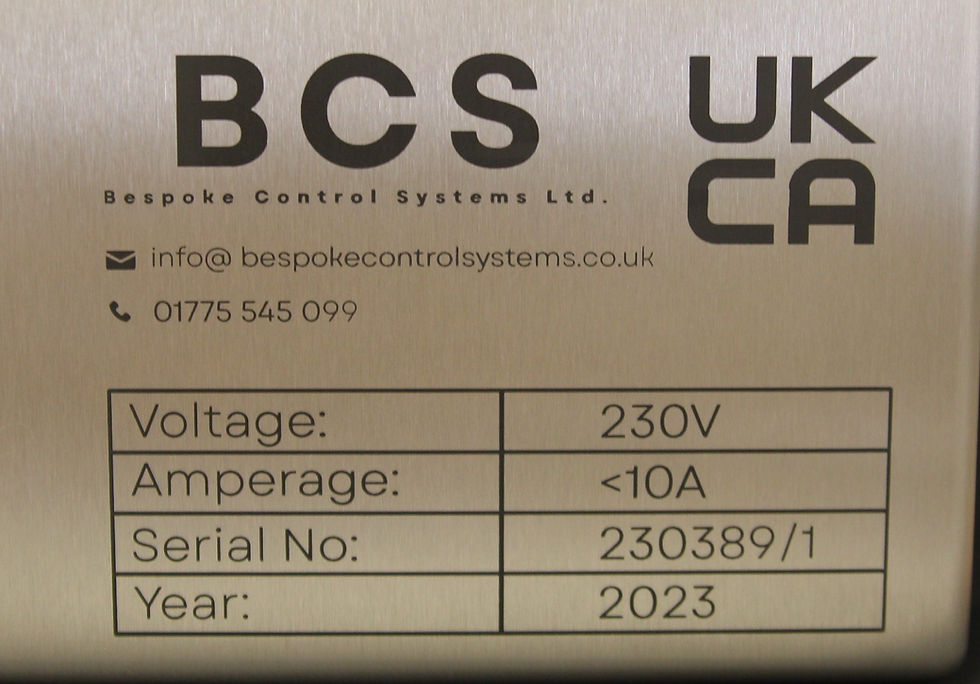
Electrical equipment often requires technical information such as operating voltage, current, frequency, power consumption or protection ratings. Displaying this information directly on the equipment allows electricians and maintenance engineers to verify compatibility and carry out work safely without consulting separate manuals.
Typical examples include:
Voltage (V)
Current (A)
Frequency (Hz)
Power (kW)
Phase
IP Rating
Fuse ratings
CE and UKCA Information
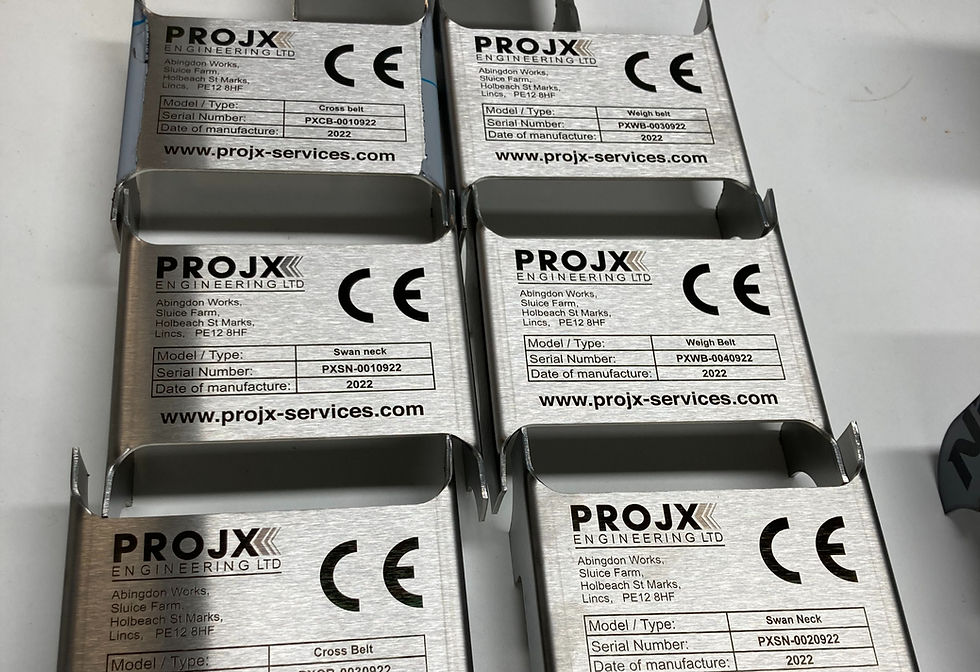
Where required by legislation, a data plate may include conformity markings such as CE or UKCA, together with information including the year of manufacture, product type, model designation and manufacturer details. The exact requirements vary depending on the product and the legislation that applies, so manufacturers should ensure the information displayed meets the relevant regulations before equipment is placed on the market.
Traceability Information
Modern manufacturing relies heavily on traceability. Permanent information such as serial numbers, batch numbers, manufacturing dates, revision levels and unique identification codes allows equipment to be tracked throughout its entire lifecycle. This supports quality management, preventative maintenance, product recalls and regulatory compliance by ensuring engineers can identify exactly which component is installed, when it was manufactured and its complete service history. Laser-marked QR codes or GS1 DataMatrix codes can also provide instant access to digital records, including manuals, inspection reports, certificates and maintenance documentation.
Barcodes and QR Codes
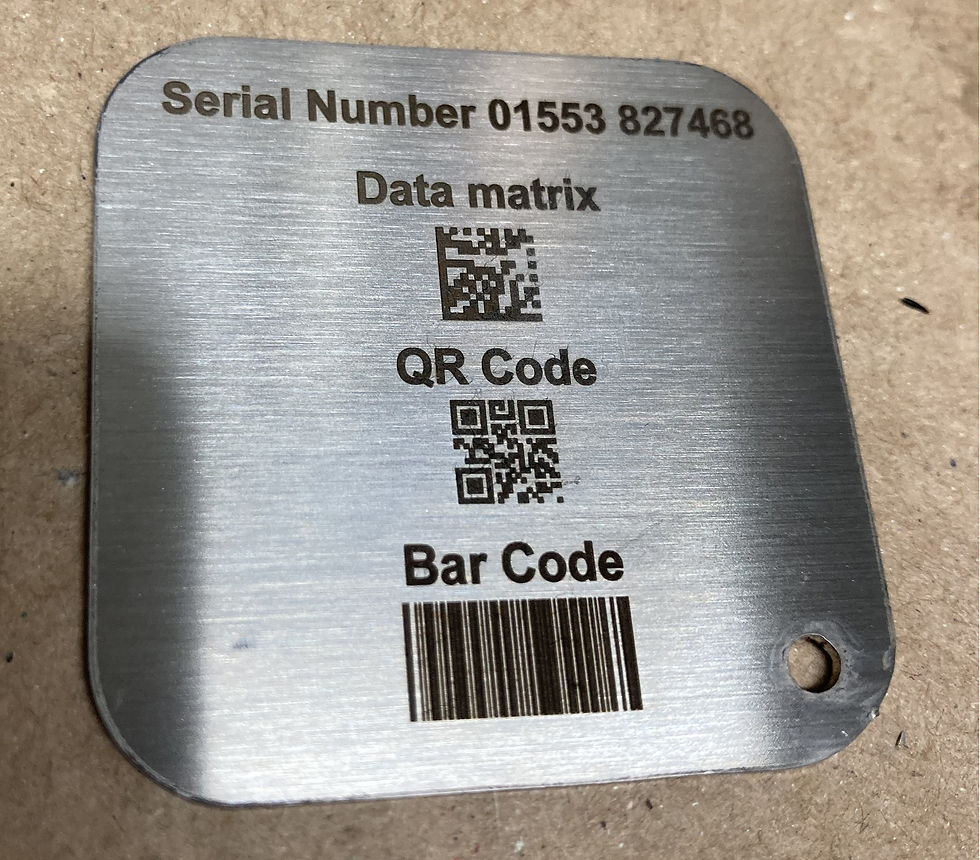
Machine-readable codes are becoming increasingly common on industrial data plates. QR codes and Data Matrix codes can link directly to digital documentation, maintenance procedures, spare parts lists, operating manuals or cloud-based asset management systems. They also reduce the risk of manual data entry errors while improving efficiency during servicing and inspections.
Javik Insight
A QR code can do much more than link to a website.
Many manufacturers now use laser-marked QR codes to give engineers instant access to operating manuals, wiring diagrams, maintenance schedules, inspection certificates, spare parts lists and service records. This reduces paperwork while ensuring important technical information is always available at the point of use.
Safety Information
Where appropriate, a stainless steel data plate can include permanent safety warnings, operating limitations or mandatory instructions. Laser marking ensures this information remains legible even in harsh industrial environments where printed labels may fade, peel or become damaged.
Logos and Branding
Although functionality is the primary purpose of a data plate, many manufacturers also include company logos or branding to present a professional appearance and reinforce brand identity. Modern laser marking can produce highly detailed logos while maintaining excellent durability and readability.
Common Mistakes When Specifying Data Plates
Javik Insight
The most common specification mistake isn't choosing the wrong material—it's choosing a plate that's too small.
As more information is added, including CE/UKCA markings, serial numbers, QR codes, electrical ratings and company logos, space quickly becomes limited. Trying to squeeze too much onto a small plate often results in text that's difficult to read. A slightly larger plate usually improves readability and creates a much more professional finished product.
Although a stainless steel data plate may seem like a relatively simple component, small specification errors can lead to unnecessary costs, reduced service life or compliance issues. Here are some of the most common mistakes we see when customers are specifying new data plates.
Specifying 316 Stainless Steel When 304 Is Perfectly Adequate
A common misconception is that 316 stainless steel should always be used because it offers higher corrosion resistance. In reality, 304 stainless steel is more than suitable for the vast majority of industrial machinery, electrical control panels and general engineering applications. Unless the equipment will be exposed to marine environments, coastal salt spray or aggressive chemicals, specifying 316 may simply add unnecessary cost without providing any practical benefit.
Forgetting Future Service Information
Many customers focus only on the information needed when the machine leaves the factory. However, a data plate should remain useful throughout the equipment's entire service life. Including information such as serial numbers, revision levels, manufacturing dates and QR codes can make future maintenance, spare parts identification and technical support significantly easier.
Choosing the Wrong Fixing Method
The material may last for decades, but the fixing method can determine whether the plate stays attached. Adhesive-backed plates work well for many applications, but high temperatures, oily surfaces or heavily textured finishes may require rivets, screws or welded fixings instead. Selecting the appropriate fixing method is just as important as choosing the correct material.
Choosing a Plate That's Too Small
Trying to fit too much information onto a small plate often results in text that is difficult to read. This becomes even more of an issue once electrical ratings, safety symbols, QR codes and compliance markings are added. Allowing sufficient space ensures the information remains clear, legible and compliant throughout the life of the equipment.
Omitting Serial Numbers or Unique Identification
Without a unique serial number or asset identifier, it becomes difficult to distinguish one machine from another. This can complicate servicing, warranty claims, maintenance records and product recalls. Assigning each piece of equipment a unique identifier improves traceability and supports quality management systems such as ISO 9001.
Not Considering the Operating Environment
One of the most important questions to ask is, "Where will this machine be used?" A data plate installed on equipment in a clean factory will have very different requirements to one fitted to machinery operating offshore, in a food processing washdown area or within a chemical plant. Considering the operating environment early in the design process helps ensure the correct material, thickness and fixing method are specified from the outset.
The good news is that most of these issues are easily avoided. By considering the operating environment, the information required and the expected service life of the equipment, you can specify a stainless steel data plate that remains durable, legible and fit for purpose for many years to come.
How Long Will a Stainless Steel Data Plate Last?
One of the most common questions we're asked is, "How long will a stainless steel data plate last?" The honest answer is that, when correctly specified, a laser-marked stainless steel data plate should last for the lifetime of the equipment it is fitted to.
Unlike printed labels or ink-based identification methods, stainless steel does not rely on adhesives, coatings or surface printing that can deteriorate over time. Instead, the information is permanently laser marked or engraved directly into the metal, creating an identification solution capable of withstanding many of the harsh conditions found in modern industrial environments.
The actual lifespan of a stainless steel data plate will depend on several factors, including the material grade, operating environment, fixing method and the marking process used.
UV Exposure
Ultraviolet (UV) light is one of the biggest causes of failure for printed labels and adhesive-backed identification products. Over time, sunlight can cause inks to fade, plastics to become brittle and adhesives to lose their strength.
Laser-marked stainless steel data plates are unaffected by UV exposure because the information is created by altering the surface of the metal itself rather than applying a printed image. This makes stainless steel an excellent choice for equipment installed outdoors or in areas exposed to direct sunlight for prolonged periods.
Oils, Grease and Industrial Contaminants
Manufacturing environments are rarely clean. Hydraulic oil, cutting fluids, lubricants, grease and airborne contaminants are all common in engineering workshops and production facilities.
A correctly manufactured stainless steel data plate is highly resistant to these substances and can be cleaned without affecting the permanently marked information. Unlike paper labels or plastic decals, laser-marked identification will not soften, dissolve or smear when exposed to common industrial oils.
Chemical Exposure
Many industries regularly use cleaning chemicals, solvents and degreasers as part of routine maintenance. In food manufacturing, pharmaceutical production and chemical processing, equipment may also be subjected to aggressive cleaning agents designed to remove contamination and bacteria.
Choosing the correct grade of stainless steel is important in these environments. While 304 stainless steel provides excellent corrosion resistance for most applications, 316 stainless steel offers improved protection where equipment is exposed to chlorides, salt or more aggressive chemicals. Selecting the appropriate material helps ensure the data plate remains both legible and structurally sound throughout its service life.
Abrasion and Wear
Data plates are often fitted to machinery that experiences frequent handling, vibration or accidental contact with tools and equipment. Over time, printed labels can become scratched, making important information difficult or impossible to read.
Laser marking offers a significant advantage because the marking becomes part of the metal surface rather than sitting on top of it. Where even greater durability is required, deep laser engraving physically removes material from the stainless steel, creating recessed markings that remain legible even after years of wear in demanding industrial environments.
Washdown Environments
Industries such as food processing, beverage production and pharmaceuticals often require equipment to be cleaned using high-pressure water, steam or specialist cleaning chemicals.
These washdown procedures can quickly destroy conventional labels, particularly where hot water, detergents or repeated cleaning cycles are involved. Stainless steel data plates, combined with permanent laser marking, provide a far more robust solution. When the correct material grade and fixing method are selected, they can withstand repeated washdowns while continuing to display critical identification and traceability information.
Outdoor Installations
Many data plates spend their entire working life outdoors, exposed to changing temperatures, rain, frost and airborne pollution.
For most inland locations, 304 stainless steel provides excellent long-term performance and is the material we recommend for the majority of industrial applications. Where equipment is installed in coastal, offshore or marine environments, 316 stainless steel offers additional resistance to salt-laden air and chloride attack, helping maximise the service life of both the plate and the permanent marking.
Proper Specification Makes the Difference
In our experience, stainless steel itself is rarely the cause of failure. Problems are far more likely to result from an incorrect specification, such as choosing the wrong material for the environment, using an unsuitable fixing method or trying to reduce costs by using printed labels where permanent identification is required.
A well-specified stainless steel data plate should remain clear, durable and fully legible for many years, often outlasting the machine or equipment it was originally fitted to. By considering the operating environment, cleaning regime and identification requirements at the design stage, manufacturers can avoid premature replacement and ensure important information remains available whenever it is needed.
Frequently Asked Questions
Is 304 stainless steel suitable for outdoor use?
Yes. In most cases, 304 stainless steel is perfectly suitable for outdoor applications, particularly in inland environments where equipment is exposed to normal weather conditions. It offers excellent resistance to rain, humidity and general atmospheric corrosion. However, if the equipment will be installed in coastal areas, offshore locations or environments with frequent exposure to salt or aggressive chemicals, 316 stainless steel is usually the better choice due to its superior corrosion resistance.
When should I choose 316 stainless steel instead of 304?
316 stainless steel is recommended when equipment will be exposed to harsher operating conditions. Typical applications include offshore platforms, marine equipment, coastal installations, chemical processing plants and food manufacturing environments where aggressive cleaning chemicals are used. For the majority of general engineering and manufacturing applications, however, 304 stainless steel remains the most practical and cost-effective choice.
Can stainless steel data plates rust?
Although stainless steel is highly resistant to corrosion, no stainless steel is completely rust-proof. Under normal industrial conditions, a correctly specified stainless steel data plate should provide many years of reliable service. Corrosion usually occurs only when the wrong material has been selected for the environment, contaminants are allowed to remain on the surface for prolonged periods or the protective chromium oxide layer has been damaged.
How long do laser-marked stainless steel data plates last?
A laser-marked stainless steel data plate can remain legible for the lifetime of the equipment. Unlike printed labels, laser marking does not rely on inks or adhesives that can peel, fade or wear away. The marking becomes a permanent part of the metal surface, making it highly resistant to abrasion, UV exposure, moisture, oils and many industrial cleaning products.
What thickness should a stainless steel data plate be?
The correct thickness depends on the application. Thin plates, such as 0.5 mm, are often used where flexibility or adhesive fixing is required. 0.8 mm is one of the most commonly specified thicknesses for general industrial equipment, offering a good balance between rigidity and ease of installation. Heavier-duty applications may require 1.5 mm or thicker to provide additional strength and durability. If you're unsure, we can recommend the most suitable option for your application.
Can QR codes and Data Matrix codes be laser marked onto stainless steel?
Yes. Modern fibre laser marking systems can permanently mark QR codes, Data Matrix codes, barcodes and serial numbers onto stainless steel with excellent accuracy. These codes can link directly to operating manuals, maintenance records, inspection certificates, asset management systems or product traceability information. When designed correctly, laser-marked codes remain highly readable throughout the service life of the equipment.
Are laser-marked data plates permanent?
Yes. Laser marking creates a permanent mark by altering the surface of the stainless steel rather than applying ink or a printed coating. This means the information cannot peel away or fade under normal operating conditions. Depending on the marking process used, laser marking can produce dark annealed marks, high-contrast surface marks or deep engraved markings to suit the application's durability and aesthetic requirements.
Can stainless steel data plates include company logos?
Absolutely. Fibre laser marking can reproduce detailed company logos, symbols and graphics alongside text, serial numbers and compliance information. This allows manufacturers to create professional-looking data plates that combine branding with essential technical information, all while maintaining excellent durability and readability.
Can stainless steel data plates be customised?
Yes. Every data plate can be manufactured to suit the application. Common customisation options include material grade (304 or 316), thickness, size, corner radius, fixing holes, adhesive backing, sequential serial numbers, QR codes, barcodes, logos and bespoke layouts. This ensures the finished plate meets both functional and aesthetic requirements.
Do I need a stainless steel data plate?
Not always, but if your equipment requires permanent identification, traceability or compliance information, stainless steel is one of the most durable and professional solutions available. It is widely used on industrial machinery, control panels, electrical equipment, food processing machinery and specialist engineering products because it remains legible in environments where printed labels often fail.
Javik Insight
A data plate is usually one of the least expensive components on a machine—but one of the most valuable.
If a motor, inverter or control board fails, identifying the correct replacement often starts with the information on the data plate. Spending a little extra time specifying the right material, layout and marking method at the design stage can prevent costly downtime and make servicing significantly easier throughout the equipment's life.
Why choose Javik Laser Ltd?
Javik Laser Ltd provides permanent industrial serial plates as well as part marking services for machined components, engineering assemblies, tools and manufactured products across a wide range of industries.
Our fibre and C02 laser systems can produce durable, high-quality markings including:
Graduated scale markings
Serial numbers
QR codes
Data Matrix codes
Logos and branding
Traceability information
Permanent component identification
Whether you require a one-off prototype or production quantities, we can deliver
precise, durable markings designed for demanding industrial environments.
ISO 9001 Accredited | UK-Wide Service | One-Off Orders to Production Quantities
Contact Javik Laser today to discuss your requirements.